
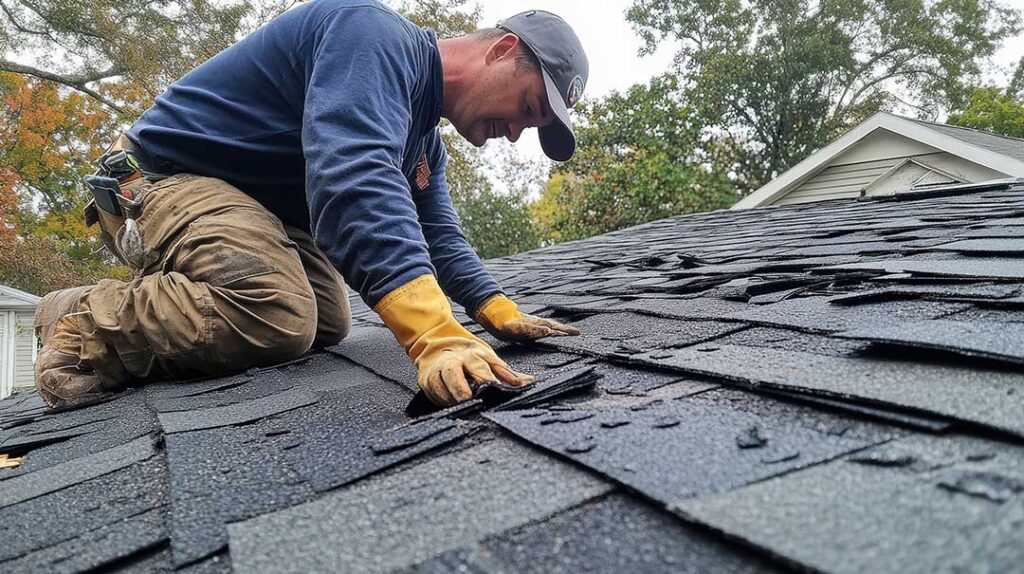
A roof leak should be treated as a water-management problem first and a repair problem second. The immediate goals are to protect people, limit interior damage, and identify whether water is still entering the building.
In Endicott, NY, leaks may appear after heavy rain, wind, snow buildup, ice formation, or repeated freeze-thaw cycles. Water can also travel along rafters, roof decking, insulation, or wall cavities, so the stain on a ceiling is not always directly below the point where the roof is failing.
What should you do first after discovering a leak?
Move people and belongings away from the affected area, then contain the water with a bucket, container, or plastic sheeting. If the ceiling is sagging, avoid standing underneath it because trapped water can cause part of the ceiling to fall.
Take these immediate steps:
- Place containers under active drips.
- Move furniture, electronics, rugs, and other belongings away from the area.
- Cover large items with plastic, leaving room for water to drain into a container.
- Mark the edges of ceiling stains with a pencil so changes can be monitored.
- Take photographs of the affected areas before cleanup or temporary covering.
- Keep children and pets away from wet flooring and damaged ceilings.
Do not puncture a bulging ceiling unless there is a serious risk of collapse and the work can be done safely. A puncture may release water suddenly and can expose electrical wiring or contaminated insulation.
Should you turn off the electricity?
Turn off power to the affected area if water is near light fixtures, outlets, switches, appliances, or electrical wiring. Do not touch electrical equipment while standing on wet flooring, and do not enter standing water to reach a panel.
If the main electrical panel is in a dry, accessible location, the affected circuit may be switched off. If reaching the panel would require walking through water or approaching damaged wiring, leave the area and seek emergency assistance. Electrical shock is a greater danger than the roof leak itself.
A ceiling stain that appears near a light fixture deserves particular caution. Water may be moving through the ceiling cavity even if the fixture is not visibly dripping.
How can you find where the leak is coming from?
Start indoors, but do not assume the ceiling stain marks the exact entry point. Water often travels horizontally before appearing inside.
From the attic, if the space is safely accessible, look for:
- Wet or darkened roof decking
- Damp insulation
- Water trails on rafters or trusses
- Daylight visible through the roof
- Rusted nails or fasteners
- Moisture near chimneys, vent pipes, skylights, or roof intersections
Roof leaks commonly develop around penetrations and transitions rather than in the middle of an otherwise intact roof surface. Possible sources include damaged flashing, missing or lifted shingles, exposed fasteners, cracked sealant, blocked drainage paths, or ice-related damage at the roof edge.
A leak may also begin during one weather event and become visible hours later. Water stored in insulation or framing can continue to appear after rain has stopped.
Is it safe to inspect the roof from outside?
Roof access is risky during or shortly after rain, snow, ice, or high winds. Wet shingles, frost, moss, steep slopes, and damaged roof surfaces can make a roof unsafe to walk on.
A ground-level inspection is usually safer. Use binoculars to look for:
- Missing, curled, cracked, or displaced shingles
- Torn areas or exposed underlayment
- Sagging roof sections
- Damaged flashing around roof openings
- Debris that may have struck the roof
- Heavy snow or ice accumulation
- Water overflowing from gutters or roof edges
Do not climb onto a roof to inspect it during active precipitation, when surfaces are icy, or when structural damage is suspected. A roof that looks stable from the ground may have weakened decking beneath the visible covering.
What temporary measures can reduce further damage?
Temporary protection may limit water entry until conditions allow a proper assessment. A tarp can be useful when it is installed securely and safely, but placing one on a wet or steep roof can create a fall hazard.
If a tarp is used, it should extend beyond the suspected damaged area and be secured without driving fasteners through additional vulnerable sections of the roof. Loose plastic, towels, or interior sealants are not reliable exterior repairs.
Inside the building, remove wet materials when practical. Wet cardboard, fabrics, and porous items can develop mold if they remain damp. Use fans or dehumidification only where electrical conditions are safe, and avoid blowing air directly across potentially contaminated water.
How can you tell whether the water is from the roof?

Not every ceiling leak comes from the roof. Plumbing lines, heating equipment, bathroom fixtures, condensation, and ice dams can also introduce water into ceilings and walls.
Clues that may help:
- Water appears only when a bathroom or plumbing fixture is used: a plumbing source is possible.
- A stain is near a vent or attic area during cold weather: condensation may be involved.
- Water appears at the roof edge after snow or ice: an ice-related drainage problem may be possible.
- A leak begins after wind-driven rain: flashing, shingles, or roof penetrations may be allowing entry.
- Water is near a chimney or masonry feature: damaged flashing or porous masonry may be contributing.
These clues are not a substitute for inspection. Water can follow framing for several feet, and multiple problems may exist at the same time.
What should you do after the leak stops?
Document the damage and continue checking the area for several days. Look for changes in stain size, peeling paint, soft drywall, musty odors, swollen trim, damp insulation, or new moisture around nearby walls and ceilings.
Wet insulation and building materials can hold moisture after the visible dripping ends. In colder weather, water may freeze inside materials and become noticeable later when temperatures rise.
If the ceiling remains soft or swollen, keep the area clear. If a large section is sagging, the roof structure appears unstable, or water is entering rapidly, the situation requires urgent safety attention rather than routine cleanup.
What roof leaks are especially common in the Endicott area?
Seasonal weather can expose different weaknesses at different times of year. Heavy summer rain may reveal problems with flashing, roof penetrations, or drainage. Fall debris can obstruct gutters and downspouts. Winter snow and ice can add weight and interfere with normal runoff. Spring freeze-thaw cycles may enlarge small cracks or loosen previously damaged materials.
Older houses may also have several layers of past repairs, additions with different roof slopes, or attic ventilation patterns that affect moisture movement. Gutters, valleys, chimneys, dormers, and roof-to-wall transitions deserve careful attention because they handle concentrated water flow.
Preventing a future leak often depends on correcting the source rather than covering the interior stain. Repainting a marked ceiling without drying the materials and addressing the entry point can hide the warning while moisture continues inside the structure.
When does a leak become an emergency?
Immediate safety action is appropriate when there is:
- Water near electrical equipment
- A rapidly spreading ceiling bulge
- Structural sagging
- A large opening in the roof
- Water entering multiple rooms
- Fire, smoke, or carbon monoxide concerns
- Flooding that cannot be contained safely
- A roof surface covered by unstable snow or ice
For smaller leaks, the most useful information to preserve is the timing, weather conditions, location of interior staining, and photographs of visible damage. Those details can help distinguish a roof entry point from plumbing, condensation, or drainage problems and can prevent unnecessary disruption during the next inspection.
