
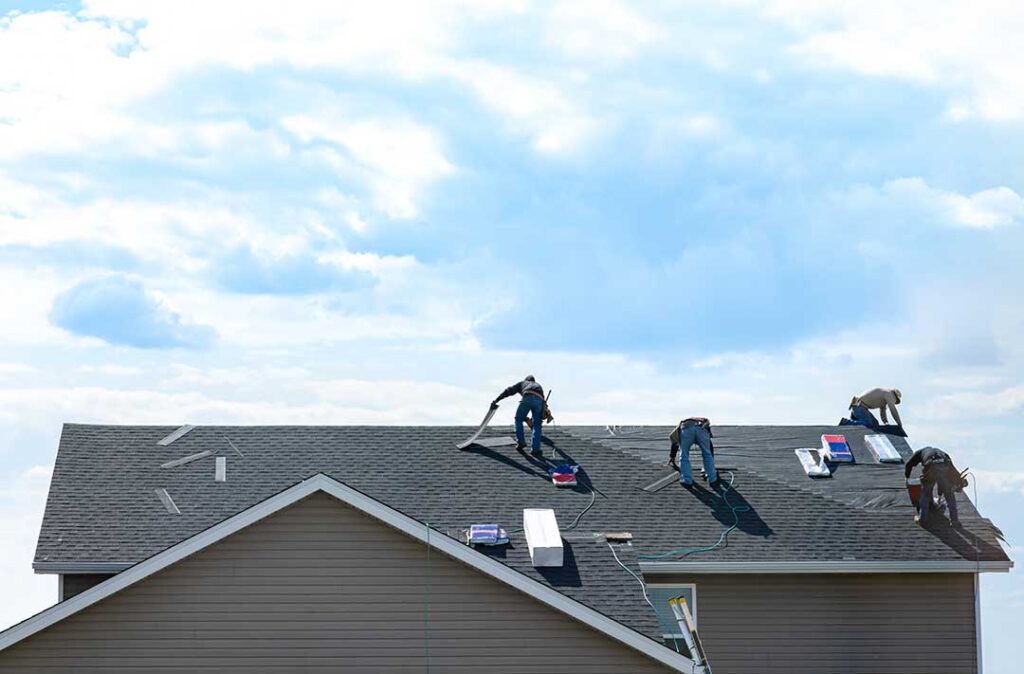
What is the difference between re-roofing and roof replacement?
Re-roofing adds a new layer of shingles over an existing layer. Roof replacement removes the old roofing materials, allows the roof deck and underlying components to be inspected, and installs a new roofing system.
The two approaches can look similar from the ground, but they are not equivalent. Re-roofing is a limited upgrade that may be suitable when the existing roof is in fair condition. Full replacement is more extensive and is generally necessary when the roof has serious damage, multiple shingle layers, or problems beneath the shingles.
For homeowners in Endicott, NY, the distinction matters because roofs must withstand snow, freeze-thaw cycles, wind, ice, rain, and occasional storm debris. A covering that looks acceptable from the yard may still have concealed deterioration.
How does re-roofing work?
Re-roofing, sometimes called an overlay, involves installing new shingles directly over an existing layer. The old shingles usually remain in place, so the work can be completed with less tear-off and less disposal.
A re-roofing project may be considered when:
- The existing roof has only one layer of shingles.
- The roof deck is dry, solid, and free of significant sagging.
- Damage is limited to surface-level shingle wear.
- The roof has a suitable slope and shape for the new roofing material.
- Flashing, ventilation, and drainage components are still serviceable or can be addressed properly.
Re-roofing does not correct problems beneath the old shingles. If water has damaged the roof sheathing, rafters, insulation, or interior ceilings, placing another layer over the surface can conceal the issue rather than solve it.
A roof with an existing overlay may also have greater weight than a single-layer roof. That added weight is one reason the roof structure and local building requirements should be considered before another layer is installed.
What happens during a full roof replacement?
A full replacement begins with removing the existing shingles and underlayment. Once the roof surface is exposed, the condition of the roof deck can be evaluated. Damaged sheathing is repaired or replaced before the new roofing system is installed.
A complete project may include:
- Tear-off and disposal of old roofing materials
- Inspection of the roof deck
- Replacement of deteriorated sheathing
- New underlayment and water-shedding layers
- Installation or repair of flashing around penetrations and roof edges
- Ice-barrier protection in areas vulnerable to ice damming
- New shingles or another selected roofing material
- Examination of ridge, soffit, or other ventilation components
Full replacement offers a clearer view of the roof’s condition. It can reveal wet wood, rusted fasteners, improperly installed flashing, old repairs, mold-like staining from chronic moisture, or gaps around vents and chimneys.
That visibility is a major difference between the two methods. Re-roofing addresses the outer surface; replacement addresses the roof assembly more completely.
Is re-roofing less expensive than replacement?
Re-roofing is often less expensive at the beginning because it requires less labor, less tear-off, and fewer disposal costs. However, lower initial cost does not automatically make it the better value.
An overlay may have limitations if the existing shingles are already near the end of their service life. It can also make future inspections and repairs more difficult because multiple layers must eventually be removed. If hidden damage is present, the apparent savings may be offset by later repairs.
Full replacement generally costs more upfront, but it provides an opportunity to correct underlying problems and install the roof on a clean, inspectable surface. The appropriate choice depends on the roof’s age, condition, construction, previous repairs, and the homeowner’s plans for the property.
A written scope of work should identify whether the project includes a one-layer overlay, complete tear-off, deck repairs, flashing work, ventilation changes, and disposal. These details affect price and performance more than the label alone.
How can a homeowner tell which option is appropriate?
The visible condition of the shingles provides useful clues, but it cannot answer every question. A roof may need full replacement if it has:
- Two or more existing shingle layers
- Widespread curling, cracking, blistering, or missing shingles
- Soft or spongy areas underfoot
- Sagging along the roof plane or ridge
- Repeated leaks in different locations
- Dark or damp areas on the underside of the roof deck
- Damaged flashing around chimneys, vents, skylights, or walls
- Extensive granule loss in gutters
- Shingles that are brittle from age or repeated weather exposure
A few isolated missing shingles do not necessarily mean the entire roof must be replaced. Conversely, a roof can appear fairly uniform while still having deck deterioration or poorly sealed penetrations.
Interior signs are also relevant. Water stains, peeling paint, damp insulation, musty odors, or recurring ceiling discoloration may indicate that the problem extends below the shingle surface.
Does the roof’s age decide the issue?
Age is a useful factor, but it is not a stand-alone diagnosis. Roofing materials age at different rates, and exposure, ventilation, installation quality, maintenance, and storm history all affect performance.
A relatively young roof may need replacement after severe wind or impact damage. An older roof may continue shedding water for a period of time if it has been well maintained, although aging materials generally have less remaining resilience.
For local homes, winter conditions deserve particular attention. Snow accumulation, repeated freezing and thawing, and ice buildup along eaves can stress shingles and flashing. Poor attic ventilation can worsen temperature differences between the roof surface and the eaves, increasing the potential for ice dams. These conditions should be evaluated as part of the roofing system rather than treated as a shingle-only issue.
Can re-roofing fix leaks?
Re-roofing may stop a minor surface leak if the source is limited to worn or damaged shingles. It is not a dependable solution for leaks caused by damaged decking, failed flashing, roof penetrations, condensation, or structural movement.
Leaks can travel along roof sheathing, rafters, insulation, and wall cavities before appearing inside the home. The location of an interior stain may therefore be different from the location where water entered.
Covering a leaking roof without identifying the source can trap moisture or delay necessary repairs. A leak that continues after surface work suggests that the cause may be beneath the shingles or at a transition point, such as a valley, wall intersection, chimney, vent, or eave.
Are there code or safety concerns?
Roofing work may be subject to local permit, material, ventilation, and installation requirements. Requirements can vary according to the scope of work and the property’s construction. Existing shingle layers, structural concerns, and changes to roof components may affect what is permitted.
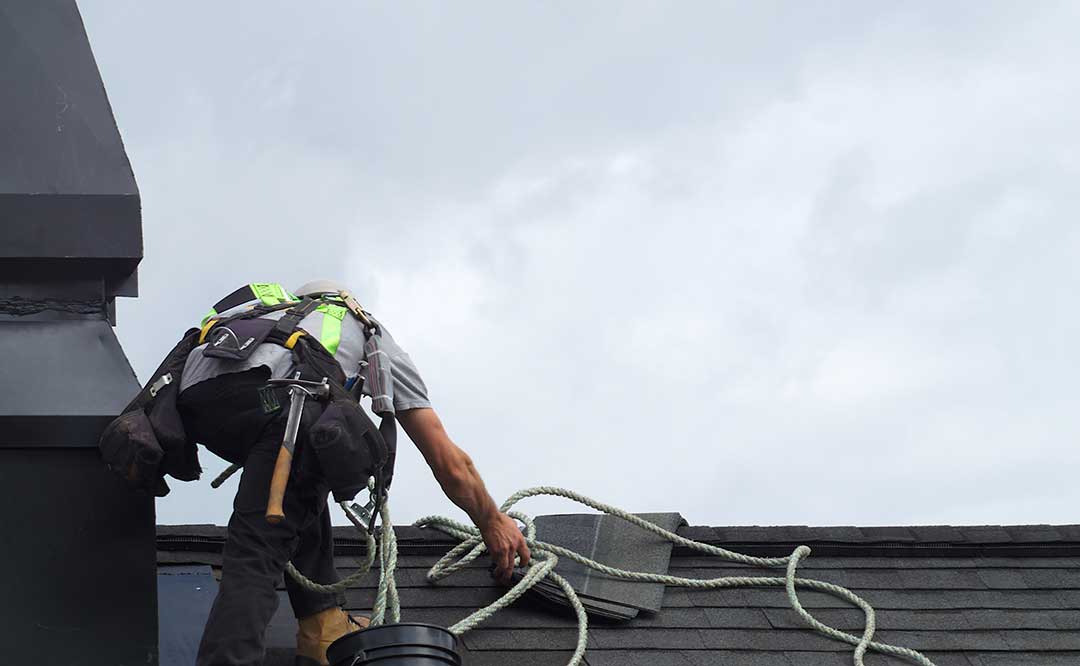
Safety is also a serious consideration. Steep slopes, wet surfaces, ice, unstable ladders, hidden roof damage, and overhead hazards create risks that are not always visible from the ground. A roof that appears suitable for a minor repair may be unsafe to walk on after snow, rain, or prolonged moisture exposure.
When structural damage, active water intrusion, electrical hazards, or unsafe access is present, evaluation by a qualified roofing or building professional is appropriate. The need for that evaluation is based on safety and accurate diagnosis, not on the assumption that every roof requires a complete replacement.
Which choice lasts longer?
A properly installed full replacement generally provides a more reliable foundation because the roof deck, underlayment, flashing, and ventilation can be inspected and addressed together. Re-roofing can perform well when the existing roof is sound, has only one layer, and the installation is allowed by applicable requirements.
The decision should be based on the condition of the entire roofing system:
- Re-roofing may fit a sound, single-layer roof with limited surface wear.
- Full replacement is usually more appropriate for widespread deterioration, hidden damage, multiple layers, or recurring leaks.
- Neither option will perform well if drainage, flashing, ventilation, or structural problems are ignored.
Understanding this difference helps homeowners compare roofing proposals accurately and avoid treating a surface covering as a substitute for a structurally sound, weather-resistant roof.
